
Ezra 6:13-22 is packed full of theological content. So often, I come to texts like it and automatically think about how Jesus fulfilled the Temple, the feasts, and the sacrifices. However, as I wrestled through this text, a significant theme stood out: when God’s people obey Him (because of His great love and mercy), God meets them in unusual ways, and the result is joy. This seemed to be the ‘point’ of the text for the original reader. They needed to be encouraged to find their joy in the Lord. That fits with Nehemiah 8:10, that the joy of the Lord is to be our strength.
Today, I thought I would reveal how Jesus is the fulfillment of the Temple, the Passover, and the sin offerings that are listed in the text.
The Temple:
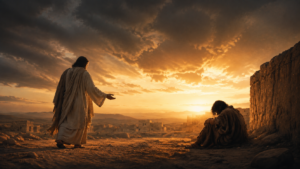
The Temple represented the presence of God with His people. It was the picture to the world that the God of the Universe was on their side. It was THE place where they met God, and it was a portrait of their future hope.
Jesus told His disciples, “Something greater than the Temple is here” (Matthew 12:6) while speaking about Himself.
- John 1:14 tells us that Jesus is the Word made flesh who tabernacled with us. He is Immanuel, ‘God with us.’ He is the presence of God among us and with us.
- John 2:19-21 tells us that Jesus is THE meeting place between God and man. 1 Timothy 2:5 clearly declares this.
- Revelation 21:22-23 tells us that “The Lord God Almighty and the Lamb” are our Temple and future hope. Titus 2:13 says Jesus is “blessed hope,” and we await His future appearing.
But that’s not all on this. Christians are called “The Temple of the Holy Spirit” (1 Cor. 3:16-17; 6:19-20; 2 Cor. 6:16), and Paul makes it clear that Christians, with and in Christ (the true Temple), become the household of the Living God.
The Passover:
The Passover is a celebration where each Jewish family remembers the salvation that God brought to their people from the land of Egypt. On Passover, each family sacrifices a lamb without blemish, sprinkles the blood of the lamb on their doorposts and lintel of their house, and then eats the roasted lamb with bitter herbs and unleavened bread. They do this because on the night of their exodus from Egypt, God commanded their people to put the blood of a lamb without blemish on their doorposts and lintels of their houses. When the angel of death went throughout Egypt for the firstborn of each home, it would “pass over” Jewish dwellings with the blood on them. Because of the Egyptians’ anguish and grief, they told the Israelites to leave quickly (the unleavened bread symbolized being prepared to leave).
Jesus fulfilled this feast in many ways, but Paul in 1 Corinthians 5:7 states that Jesus is our Passover lamb who has been sacrificed for us.
- 1 Peter 1:19 tells us that Jesus was without spot or blemish, and His blood redeems us.
- Hebrews 9:12-14 tells us that Jesus’ blood offers us eternal redemption. Meaning, if the blood of Jesus marks our lives, God’s wrath “passes over” us.
The portrait of this that is a part of our church’s liturgy and practice is the Lord’s Supper. Jesus said in Luke 22:19-20 that the cup is the new covenant in His blood, and the bread represents His body that was given for us. It’s our new “Passover.”
The Sin offering:
Ezra 6:17 says, “They offered at the dedication of this house of God 100 bulls, 200 rams, 400 lambs, and as a sin offering for all Israel 12 male goats, according to the number of the tribes of Israel.” These male goats were offered to God as a sin offering and as an act of consecrating the Temple, while expressing unity as the people of God. There were only two tribes in Jerusalem at the time (3, if you include the Levites). So, when the people offered 12, one for each tribe, it represents their understanding that the Temple belonged to ALL of Israel.
Now, this wasn’t the Day of Atonement, but was a day of celebration. The sin offering was an animal that died instead of the people. The animal was a substitutionary sacrifice. As mentioned above about the Passover, Jesus fulfills all sin offerings like this.
- 2 Cor. 5:21 states that God made Jesus, who knew no sin, to be sin for us, so that we could receive His righteousness. He took our place.
- 1 John 1:7 says that the blood of Jesus cleanses us of all our sin.
- John 1:29 quotes John the Baptist saying that Jesus is the Lamb of God who will take away the sin of the world.
As Christians, we believe that Jesus is the true Israel, who fulfilled all that Israel was supposed to be. He is the true Temple, the Passover Lamb, and He’s the eternal sacrifice for our sins. He said that He had come to fulfill all the law and the prophets (Matthew 5:17).
Now, the reason I didn’t preach on this Sunday was for two reasons: 1) if we were original readers, we wouldn’t have had the privilege of progressive revelation to know all of this. As 1 Peter 1:10-12 states, the Old Testament believers searched and inquired about these things, but didn’t see them in full revelation, like we have. We understand things that even angels long to look into. Stunning!
This week and looking ahead:
This week, we will examine Ezra 7:1-10 and talk about Ezra’s leadership. An interesting thought for you: From Ezra 6 to Ezra 7, there’s a span of roughly 57 years. During that time, the book of Esther takes place.
Cheap Seats:
- I’m a sucker for these kinds of stories. Don Mattingly was one of my favorite players growing up. They call him Donnie Baseball. He was one of the rare Yankee greats to never play in a World Series. But now, he’s a coach for the Blue Jays…making his first World Series. This is an excellent article about that: https://www.mlb.com/news/don-mattingly-first-world-series?partnerID=mlbapp-iOS_article-share.
- Joe Carter hit the 2nd walk-off home run that ended a World Series. He’s a Blue Jay legend. He threw out the 1st pitch at Game 2 last weekend. Here’s that story: https://www.mlb.com/news/joe-carter-first-pitch-toronto-2025-world-series-game-2?partnerId=it-20251026-15440444-mlb-1-B&utm_id=it-20251026-15440444-mlb-1-B&lctg=234822312
- I’d love to go here to watch a World Series game with these folks: https://www.mlb.com/news/blue-jays-bar-world-series-iqaluit-canada?partnerID=mlbapp-iOS_article-share
- Find 35 minutes and watch this condensed game of Game 3 of the World Series: https://www.mlb.com/video/condensed-game-tor-lad-game-3. It was the longest game in World Series history, and it was simply stunning baseball.
- Gig ‘Em, Aggies!
Have a great week!
Christ is King!
In Christ,
Dave York